Ask any parent what the hardest hour of the day is, and most will say the one right after dinner. Kids are tired but wired, the lights go off, and suddenly the child who insisted they weren't sleepy has seventeen questions and an urgent need for water.
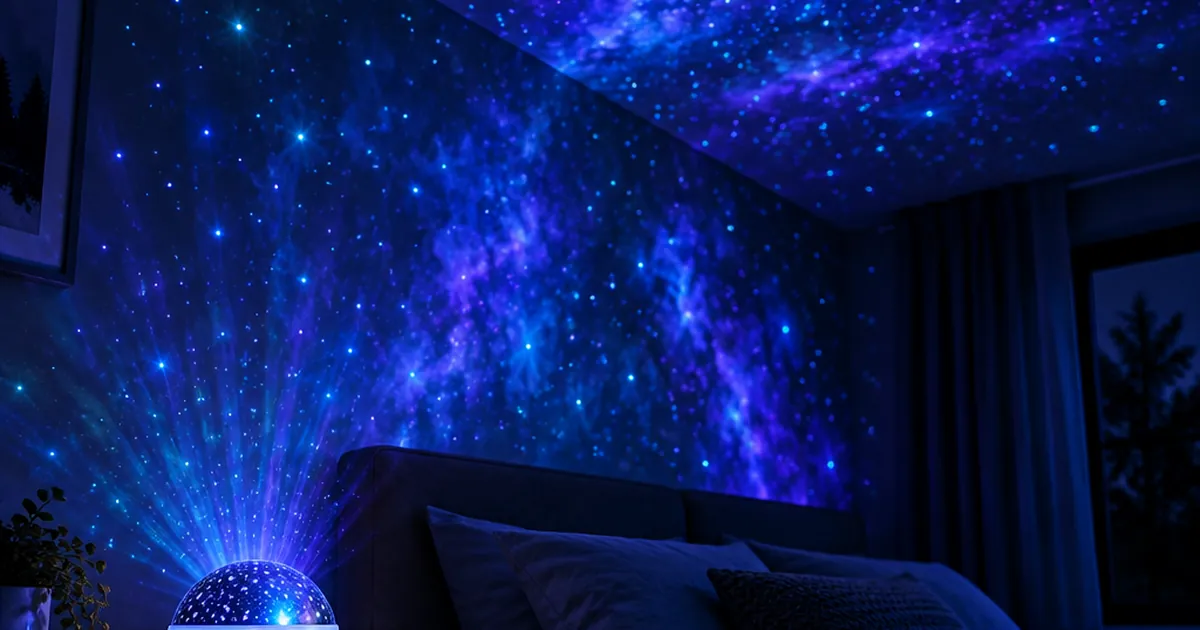
A star projector won't solve all of that, but it changes the mood of a room in a way few things can. Switch it on and the ceiling disappears into drifting stars, and bedtime stops feeling like the end of the day and starts feeling like the beginning of a story.
Here's how these little lights work, how to set one up, and how to fold one into a routine that actually ends in sleep.
Why a starry ceiling works
It gives imagination somewhere to go
Young children process the day through play and story. A ceiling full of stars invites exactly that: counting them, finding constellations, inventing a rocket that will fly everyone to sleep. The light becomes a prompt for the quiet kind of imagining that settles a child down instead of winding them up.
It marks the transition
Routines work because they signal what comes next. When the projector switches on, the room itself changes, and even very young children learn quickly that stars mean the day is over. It's a cue that doesn't require a single word from a tired parent.
Choosing the right projector
Galaxy projectors
These cast moving nebulas and star fields across the walls and ceiling, usually with adjustable colors and speeds. Our Galaxy Star Projector covers a whole ceiling, which makes it a favorite for shared rooms where two kids are watching the same sky. Look for a timer and a dimmer — you'll use both every night.
Sunset and glow lamps
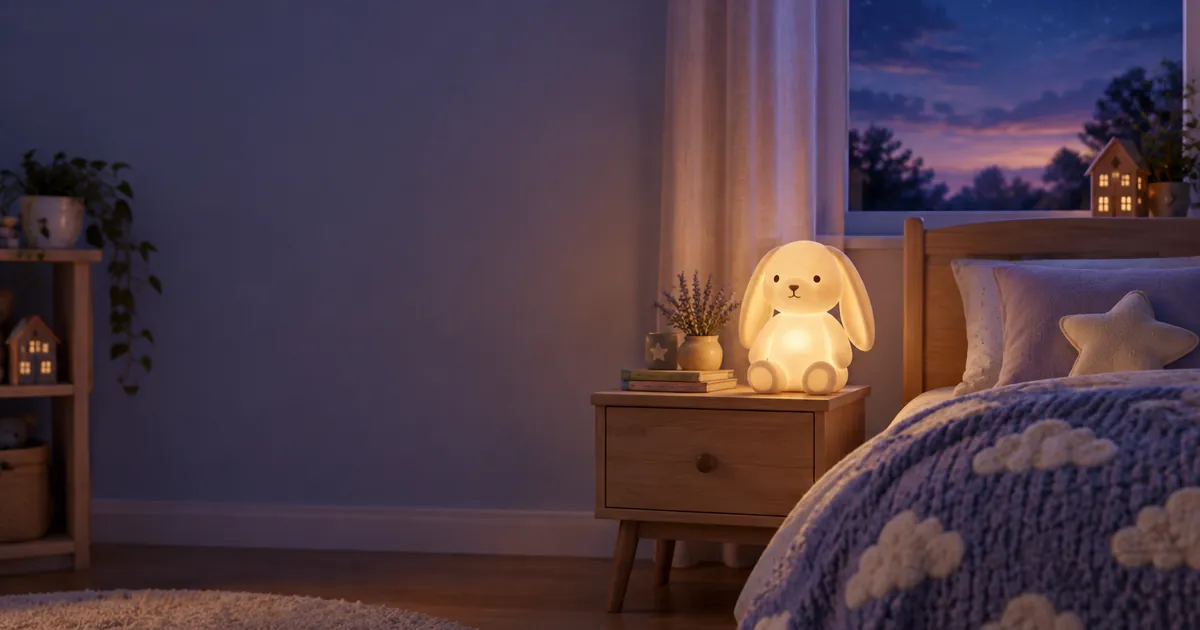
Not every child wants a whole galaxy. A Sunset Glow Projector Lamp washes the room in the soft orange-pink of dusk, which is calmer and better suited to children who find motion distracting. It's also lovely in babies' rooms, where a still, warm glow is plenty.
Setting up your first star show
You don't need an engineering degree — just a few minutes and a little trial and error:
- Place it low and angled up. A shelf or dresser about waist height, aimed at the ceiling, spreads the stars widest.
- Start dim. You can always brighten later; you can't un-startle a child who's already in bed.
- Slow the motion. If your model has speed settings, choose the slowest. The point is drifting, not dancing.
- Set the timer. Thirty to sixty minutes is usually right — long enough to fall asleep under, short enough that the projector isn't running at midnight.
A bedtime routine built around the stars
The projector works best as a chapter marker in the evening, not as background noise all night. One pattern that works well for many families:
- Bath and pajamas as usual, lights on.
- Into bed, then the projector switches on — this is the official start of story time.
- One or two books while the stars drift overhead.
- A short chat about the sky: which star is yours tonight? What is the moon doing?
- Lights out, projector on its timer, goodnight.
Most children settle into this within a week. The stars become the signal that talking time is over and drifting-off time has begun.
Questions parents ask
Will it keep my child awake?
Usually the opposite, if the light is dim and the motion slow. The exception is children who are highly sensitive to stimulation — for them, a still sunset glow is the better pick.
Can it run all night?
Most models can, but we don't recommend it. A timer protects the bulb and the battery, and — more importantly — lets the room go properly dark by morning.
What age is right?
Star projectors suit children from about two years old up through the grade-school years. Younger babies do better with a soft, still glow.
When a projector isn't the answer
A few children find moving light stimulating rather than soothing. If yours gets more awake when it's on, switch to a static mode or a still glow lamp. And if your child shares a room with a sibling on a different schedule, a focused beam or a lower brightness setting keeps the show on one side of the room.
It's also worth saying plainly: a projector is a comfort, not a sleep cure. If bedtime struggles run deeper — short naps, late screens, an overtired child — fix those first and let the stars be the garnish.
Make tonight the first mission
Bedtime may never be the easiest hour of your day, but it can become the one you look forward to. Browse the full star projectors collection, pick the sky your child will love, and let the countdown to liftoff begin. Free US shipping, no sales tax — one small box between you and a quieter goodnight.