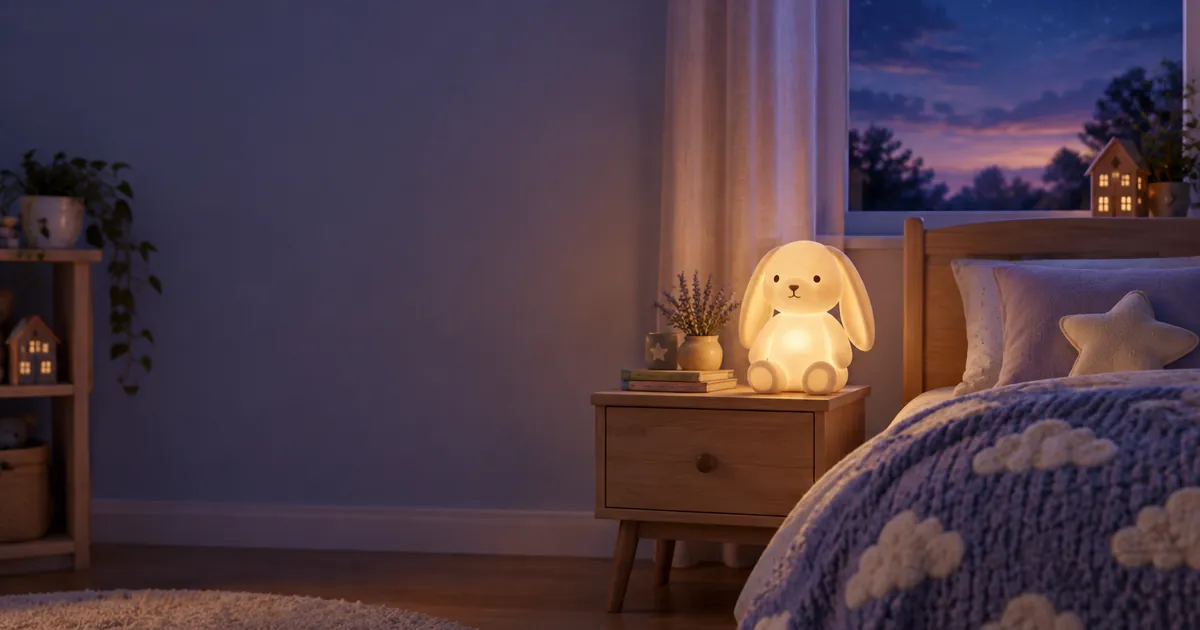
You did the bath. You read the books. You sang the songs, dimmed the lights, and tiptoed out like a burglar in reverse. And yet — forty minutes later, there's a small voice at your door asking for water, another hug, or just one more trip to the bathroom. If this sounds familiar, the problem probably isn't your child. It's a handful of small habits that quietly work against sleep. Here are the seven we see most often, along with fixes that actually stick.
1. Screens too close to lights-out
Tablets, TVs, and phones keep young brains in "on" mode. The light tells the body it's still daytime, and whatever they're watching keeps the mind humming long after the screen goes dark. The fix: build a 60-minute screen-free buffer before bed and swap in quiet play, drawing, or books. If your child uses a sound machine or a projector app, set it up before the buffer starts so nobody has to touch a screen again. It helps to follow the rule yourself, too — kids notice whose phone glows across the room. If the whole family relaxes this rule on weekends, hold the line on school nights at least; consistency is what makes it work.
2. A bedroom that's too bright
Even small amounts of light can make falling asleep harder — a streetlamp through thin curtains, a glowing clock, a hallway light left on "just in case." For kids who genuinely can't settle in the dark, a comfortable sleep mask is often the kindest solution. Our Midnight Kittens Sleep Mask turns light-blocking into something kids look forward to, which matters more than you'd think — a mask they love is a mask they'll actually keep on.
3. Skipping the wind-down routine
Kids don't have an off switch; they have a dimmer, and it takes time. Going straight from wild play (or screens) to bed asks their bodies to do something they're not ready for. A predictable 20–30 minute routine — bath, pajamas, two books, a song, lights out — gives the dimmer time to slide down. A five-minute heads-up before it starts ("two more puzzles, then bath") prevents the meltdown that comes with an abrupt stop. Same order, same time, every night. Boring for you, deeply reassuring for them. Write it down if it helps; kids love checking off a routine chart more than we'd expect.
4. A bedtime that drifts on weekends
An hour later on Friday and Saturday might feel harmless, but young body clocks notice. By Sunday night, your child is essentially jet-lagged, and Monday's bedtime becomes a battle. Keep bedtime within about 30 minutes of the school-night time, even on weekends. If the whole schedule slipped over the summer or a holiday, shift it earlier in 15-minute steps rather than all at once.
5. Heavy dinners or late-night snacks
A growling stomach keeps kids awake, but so does a full one. Big meals within an hour or two of bed make it harder to settle, and sugary treats close to bedtime can cause a mini energy spike right when you need calm. Aim for dinner at least 90 minutes before lights-out, and if your child is genuinely hungry later, keep the option boring and light — a banana, warm milk, plain toast.
6. Naps that run too late
Naps aren't the enemy, but timing is. A late-afternoon nap for a toddler, or a doze on the school run that turns into an hour, can steal the sleep pressure your child needs by evening. If bedtime has become a struggle, look at when the last nap or quiet time ends. For most kids over three, wrapping daytime sleep by mid-afternoon protects the night. Overtired kids sleep worse, not better — the classic second wind is real, and it usually strikes right at bedtime.
7. A room that's too warm
Body temperature naturally drops as we fall asleep, and a warm, stuffy room works against it. Most children sleep best in a room around 65–70°F (18–21°C), in breathable pajamas rather than thick blankets. If your child runs warm or kicks off covers, a light, weighted touch can help without heat — the Cloud Wash Weighted Eye Pillow adds gentle, calming pressure across the eyes, which many kids describe as "a hug that helps me stop thinking."
Small fixes, better nights
None of these mistakes will disappear overnight, and that's fine — pick the one that sounds most like your house and start there. Change one habit at a time so you can tell what's actually working, and give each fix a full week before judging it. Most families see a difference within a week or two of consistent change. And when you're ready to make the bedroom itself part of the solution, our sleep comfort collection gathers the masks, pillows, and small comforts that turn "go to sleep" into something kids can actually do.